
- New
| Reference: | S30506 |
| Author | Domenico FALCINI |
| Year: | 1603 |
| Measures: | 367 x 515 mm |
| Reference: | S30506 |
| Author | Domenico FALCINI |
| Year: | 1603 |
| Measures: | 367 x 515 mm |
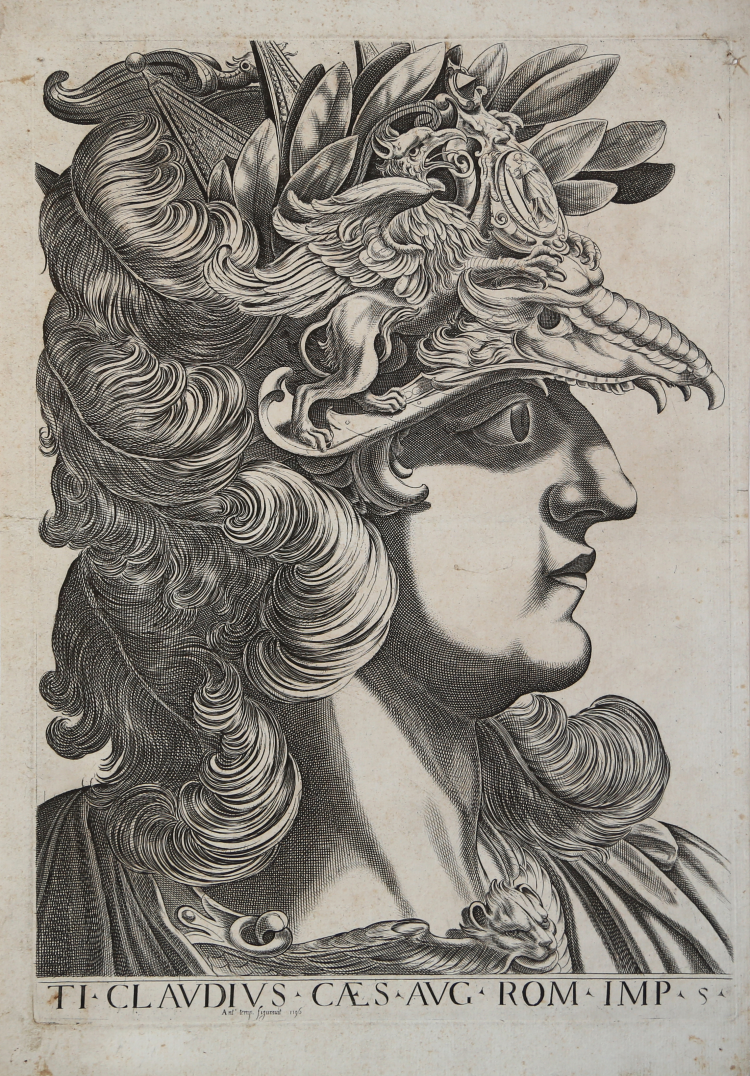
Engraving, 1603, unsigned and unmarked.
From the series "The Twelve Emperors" based on subjects by Antonio Tempesta (Florence 1555 – Rome 1630).
The series "The Twelve Emperors" was first published in Rome by Tommaso Moneta (active 1590-1603) in 1596, under the direction and on behalf of Antonio Tempesta, as evidenced by the inscription at the bottom "Antonius temp figurauit 1596". The name of the engraver of the 12 large-format plates is unknown. Only three complete series are known from Tommaso Moneta's collection, preserved in Hamburg, Dresden, and the Farnesina in Rome.
The same series was later interpreted, on behalf of the publisher Andrea Vaccari in 1606, by Raffaello Schiaminossi (Bartsch XVII.235.98-110).
This anonymous engraving, lacking Tommaso Moneta's imprint, is a faithful copy of the version commissioned by Tempesta. For stylistic reasons, it is attributed to the Sienese engraver Domenico Falcini. In December 1603, the artist submitted an official request for a papal privilege to print and protect his own series of engravings dedicated to all the Roman Emperors, starting with Julius Caesar (Archivio Stato Vaticano, Sec. Brev. 340, f. 346r, cf. M. Bury, 'The Print in Italy 1550-1625', British Museum, London 2001, p. 225). This type of graphic collection – like that of Antonio Tempesta mentioned above – was a genre of enormous editorial success among collectors and scholars between the 16th and 17th centuries.
Domenico Falcini (Del Falcino) was born in Siena on May 8, 1575; it is very likely that his artistic training took place in his homeland at the school of Francesco Vanni and Ventura Salimbeni, and that Falcini collaborated with the publisher and engraver Matteo Florimi, as suggested by some decorative elements derived from by the latter, frequent in early engravings. About eighty works by Falcini are known, almost all in burin: this number, with the exception of a few lost or untraceable examples, has been confirmed by the most recent historiographical research (see Piazzi, 1985-86).
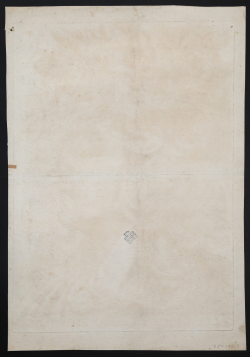
A beautiful work, printed on laid paper without watermark, with margins, trace of a central horizontal fold, and small oxidations at the bottom, otherwise in excellent condition.
Very rare work.
Collection mark of Bernfeld Akim Gregorowitsch (Lugt 127).
Bibliografia
Piazzi, Domenico del Falcino incisore senese del XVII secolo, tesi di laurea, Univ. di Siena, fac. di lettere, aa. 1985-86; E. Leuschner, The Pinting Privilege in Tuscany: Falcini, the Florimis and Callot, in “Print Quarterly”, XXV, pp. 243-254; Charles Le Blanc, Manuel de l'amateur d'estampes, Paris 1856, II, p. 214; G.K. Nagler, Die Monogrammisten, II, München 1860, nn. 1100 s., 1299; Maria Cristina Misiti, Falcini Domenico in “Dizionario Biografico degli Italiani” Volume 44 (1994); M. Bury, 'The Print in Italy 1550-1625', p. 225.
Domenico FALCINI (Siena 1575 - 1628)
|
Domenico Falcini (Del Falcino) was born in Siena on May 8, 1575. It is highly likely that his artistic training took place in his native Siena at the school of Francesco Vanni and Ventura Salimbeni, and that Falcini collaborated with the publisher and engraver Matteo Florimi, as suggested by some decorative elements, derived from the latter, frequent in his early engravings. Falcini also learned the chiaroscuro woodcut technique developed by Ugo da Carpi and later adopted by Domenico Beccafumi and Marco Pino. However, no woodcuts of his are known today, although several sources attribute to him some chiaroscuro intaglios: panels engraved on three woods depicting the life of St. John the Baptist, designed by Giovanni Battista Vanni. In 1597, he was described as a "worker" of Matteo Florimi. In 1607, in Siena, he published the engravings he had made himself, along with some by Cesare Bassano and Ciamberlano, in " Il sacro santo senato di Giesu Christo”. He obtained papal privilege on December 12, 1603, to cover a series of engravings of all the emperors starting with Julius Caesar. His death is recorded on May 14, 1628, and the epigraph referring to his activity reads “stampatore di figure in rame” [printer of copper figures]. He contributed to Moroni's “Descrizione del Sacro Monte della Verna” of 1612. Around eighty works by Falcini are known, almost all in engraving: this number, with the exception of a few lost or untraceable examples, has been confirmed by the most recent historiographical research (Piazzi, 1985-86). Falcini worked extensively on illustrations, frontispieces and theses shields, not only executing the plates, sometimes of his own invention, but often directly overseeing their printing.
|
Domenico FALCINI (Siena 1575 - 1628)
|
Domenico Falcini (Del Falcino) was born in Siena on May 8, 1575. It is highly likely that his artistic training took place in his native Siena at the school of Francesco Vanni and Ventura Salimbeni, and that Falcini collaborated with the publisher and engraver Matteo Florimi, as suggested by some decorative elements, derived from the latter, frequent in his early engravings. Falcini also learned the chiaroscuro woodcut technique developed by Ugo da Carpi and later adopted by Domenico Beccafumi and Marco Pino. However, no woodcuts of his are known today, although several sources attribute to him some chiaroscuro intaglios: panels engraved on three woods depicting the life of St. John the Baptist, designed by Giovanni Battista Vanni. In 1597, he was described as a "worker" of Matteo Florimi. In 1607, in Siena, he published the engravings he had made himself, along with some by Cesare Bassano and Ciamberlano, in " Il sacro santo senato di Giesu Christo”. He obtained papal privilege on December 12, 1603, to cover a series of engravings of all the emperors starting with Julius Caesar. His death is recorded on May 14, 1628, and the epigraph referring to his activity reads “stampatore di figure in rame” [printer of copper figures]. He contributed to Moroni's “Descrizione del Sacro Monte della Verna” of 1612. Around eighty works by Falcini are known, almost all in engraving: this number, with the exception of a few lost or untraceable examples, has been confirmed by the most recent historiographical research (Piazzi, 1985-86). Falcini worked extensively on illustrations, frontispieces and theses shields, not only executing the plates, sometimes of his own invention, but often directly overseeing their printing.
|