
| Reference: | S50974 |
| Author | Cornelis Boel |
| Year: | 1607 ca. |
| Measures: | 150 x 180 mm |
| Reference: | S50974 |
| Author | Cornelis Boel |
| Year: | 1607 ca. |
| Measures: | 150 x 180 mm |
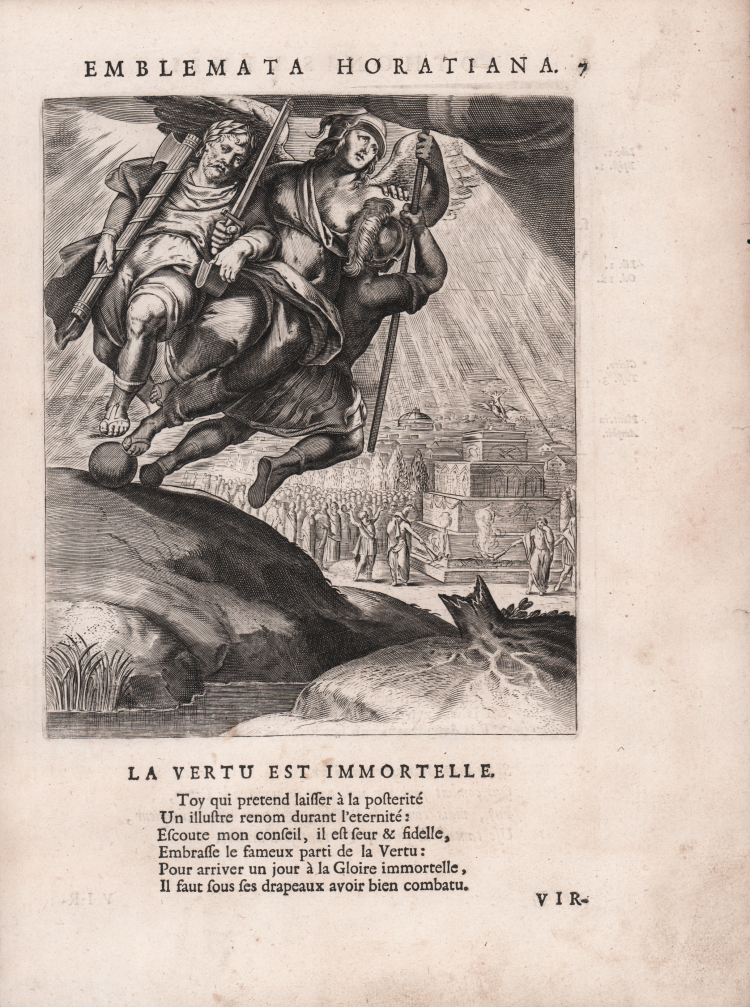
Allegory of Immortal Virtue, engraved by Cornelis Boel from a subject by Otto van Veen.
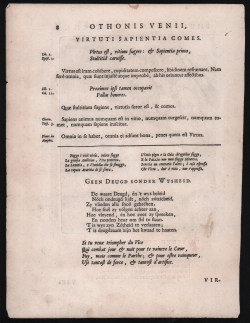
Engraving, 1607 circa, printed on contemporary laid paper, in excellent condition. Descriptive text on verso.
“Virtus immortalis” refers to virtue that never dies, a concept that in Roman mythology represented military valor (Virtus) as an abstract and eternal deity (immortalis), often associated with honor and Mars. The broader meaning of “virtue” includes excellence, strength, courage, and the ability to act well, a concept that has been interpreted in various ways throughout history, from Machiavelli's politics to Nietzsche's will to power.
Work taken from Quinti Horatii Flacci Emblemata, imaginibus in aes incisis, notisque illustrata, studio Othonis batavo-lugdunensis. Editio nova correctior, and SS: Patrum, Senecae atque aliorum philosophorum and poetarum printed in Antwerp in 1683.
Cornelis Boel (c. 1576 – c. 1621)
|
Cornelis Boel (c. 1576 – c. 1621) was a Flemish draughtsman and engraver. He is sometimes known as Cornelis Bol, or Cornelis Bol I, to distinguish him from later artists of the same name. Boel was born at Antwerp in around 1576. He worked mostly as an engraver, in the style of the Sadeler family, of which he was probably a pupil. His plates are executed in a clear, neat style. He engraved a set of oval plates for the Fables of Otto Voenius, published at Antwerp in 1608. His most substantial works are eight large plates of the battles of Charles V and Francis I, executed in collaboration with Jode de Gheyn, the younger, after Antonio Tempesta. He engraved also the plates to Salomon de Caus's La perspective avec la raison des ombres et miroirs (1611). He probably spent some time in England, as appears from his frontispiece to the first edition of the translation of the Bible published by royal authority in 1611, later known as the "King James Version", or the "Authorized Version". It is signed "C Boel fecit, in Richmont.", which has been taken as an indication that he engraved it while staying at Richmond Palace. He also engraved a portrait of Henry, Prince of Wales, an oval print with an ornamental border, published by Pieter de Jode I in around 1611–12. Another plate, of The Last Judgment, is signed "Cornelis Boel fecit", with no indication of the name of the painter.
|
Cornelis Boel (c. 1576 – c. 1621)
|
Cornelis Boel (c. 1576 – c. 1621) was a Flemish draughtsman and engraver. He is sometimes known as Cornelis Bol, or Cornelis Bol I, to distinguish him from later artists of the same name. Boel was born at Antwerp in around 1576. He worked mostly as an engraver, in the style of the Sadeler family, of which he was probably a pupil. His plates are executed in a clear, neat style. He engraved a set of oval plates for the Fables of Otto Voenius, published at Antwerp in 1608. His most substantial works are eight large plates of the battles of Charles V and Francis I, executed in collaboration with Jode de Gheyn, the younger, after Antonio Tempesta. He engraved also the plates to Salomon de Caus's La perspective avec la raison des ombres et miroirs (1611). He probably spent some time in England, as appears from his frontispiece to the first edition of the translation of the Bible published by royal authority in 1611, later known as the "King James Version", or the "Authorized Version". It is signed "C Boel fecit, in Richmont.", which has been taken as an indication that he engraved it while staying at Richmond Palace. He also engraved a portrait of Henry, Prince of Wales, an oval print with an ornamental border, published by Pieter de Jode I in around 1611–12. Another plate, of The Last Judgment, is signed "Cornelis Boel fecit", with no indication of the name of the painter.
|