

| Reference: | S52060 |
| Author | Pieter VANDER AA |
| Year: | 1723 |
| Measures: | 115 x 170 mm |
| Reference: | S52060 |
| Author | Pieter VANDER AA |
| Year: | 1723 |
| Measures: | 115 x 170 mm |
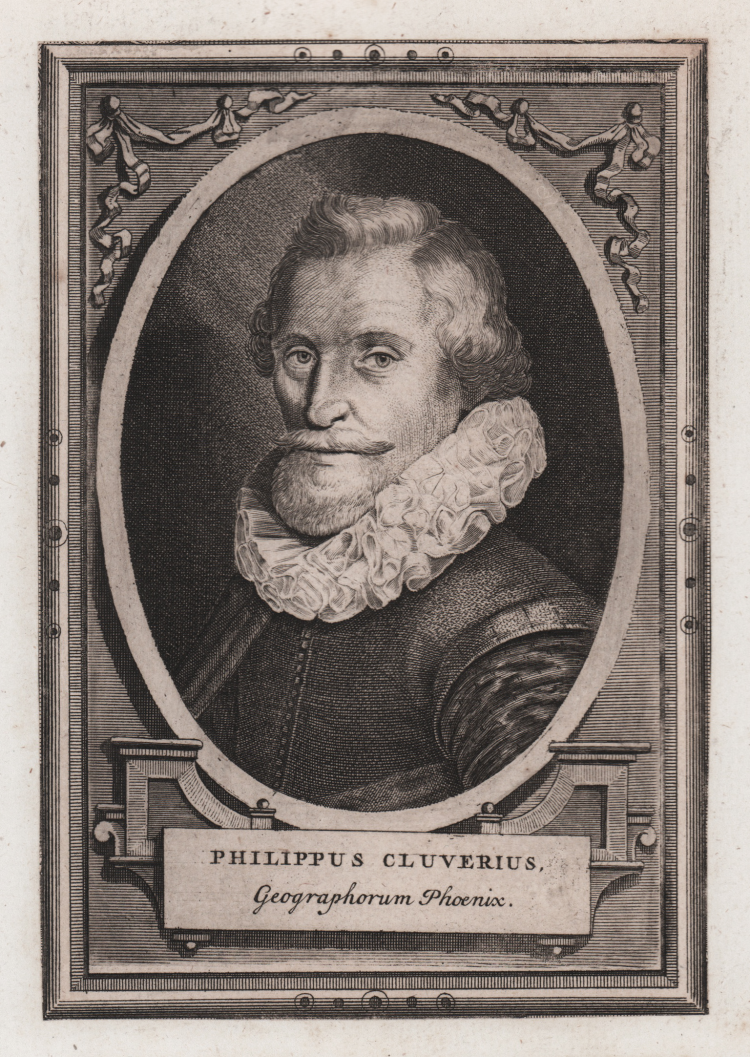
Il foglio proviene dalla enciclopedica edizione di Georgius Graevius "Thesaurus antiquitatum et historiarum Italiae", illustrante l'intera penisola italiana.
Filippo Cluverio (nome italianizzato di Philipp Clüver o Klüver) (Danzica, 1580 – Leida, 31 dicembre 1622) è stato uno storico e geografo tedesco considerato il fondatore della geografia storica. Nacque a Danzica nel 1580. Dopo aver viaggiato a lungo in Germania e Polonia (dove imparò il polacco), iniziò gli studi di giurisprudenza a Leida, ma presto rivolse la sua attenzione alla storia e alla geografia, allora insegnate a Leida da Giuseppe Giusto Scaligero. Arruolatosi come soldato, viaggiò in Boemia e Ungheria, dove fu imprigionato, poi tornò a Leida e di là intraprese lunghi viaggi a scopo di studio in Inghilterra, Scozia Francia e Italia, che visitò accompagnato da Luca Olstenio; tornato definitivamente nei Paesi Bassi nel 1616, ricevette una pensione regolare dall'Università di Leida. Morì a Leida nel 1623.
Peter van der Aa (Leida, 1659 ? Leida, agosto 1733) fu uno dei maggiori editori europei del diciassettesimo e diciottessimo secolo, operando circa dal 1682 a Leida insieme ai suoi fratelli. Tradusse, tra le altre opere, anche quelle di Erasmo da Rotterdam, come l'Elogio della follia e pubblicò le raccolte di storia e archeologia di J.G. Graeve e le opere botaniche di Jan Gronov.
Johann Georg Graevius (correttamente Guava o Greffe) (29 Gennaio, 1632 - 11 Gennaio, 1703) fu uno studioso tedesco nato a Naumburg. Orientato verso studi giurisprudenziali mutò i suoi interessi verso la filologia dopo l'incontro con Johann Friedrich Gronovius. Durante il suo soggiorno ad Amsterdam, sotto l'influenza di Blondel abbandonò il luteranesimo e si unì alla Chiesa riformata, e nel 1656 fu chiamato dal principe elettore di Brandeburgo per la cattedra di retorica nella Università di Duisburg. Nel 1662 si trasferì alla Università di Utrecht, dove occupò la cattedra di retorica, e in aggiunta, dal 1667 fino alla sua morte, anche quella di storia e politica. Venne insignito di un riconoscimento speciale da Louis XIV, ma fu soprattutto apprezzato da Guglielmo III d'Inghilterra, che ne fece lo storiografo reale. Le sue due opere più importanti sono la antiquitatum Thesaurus Romanarum (1694-1699, in 12 volumi), e il Thesaurus antiquitatum et Historiarum Italiae pubblicato dopo la sua morte
Pieter VANDER AA (1659 - 1733)
|
Records show that van der Aa, born in Leyden in 1659, made an early start in life by being apprenticed to a bookseller at the age of nine and starting on his own in business as a book publisher by the time he was twenty-three.
During the following fifty years he published an enormous amount of material, including atlases and illustrated works in every shape and size, two of them consisting of no less than 27 and 28 volumes containing over 3,000 maps and plates.
Most of his maps were not of the first quality and were certainly not original, but they are often very decorative and are collected on that account.
|
Pieter VANDER AA (1659 - 1733)
|
Records show that van der Aa, born in Leyden in 1659, made an early start in life by being apprenticed to a bookseller at the age of nine and starting on his own in business as a book publisher by the time he was twenty-three.
During the following fifty years he published an enormous amount of material, including atlases and illustrated works in every shape and size, two of them consisting of no less than 27 and 28 volumes containing over 3,000 maps and plates.
Most of his maps were not of the first quality and were certainly not original, but they are often very decorative and are collected on that account.
|